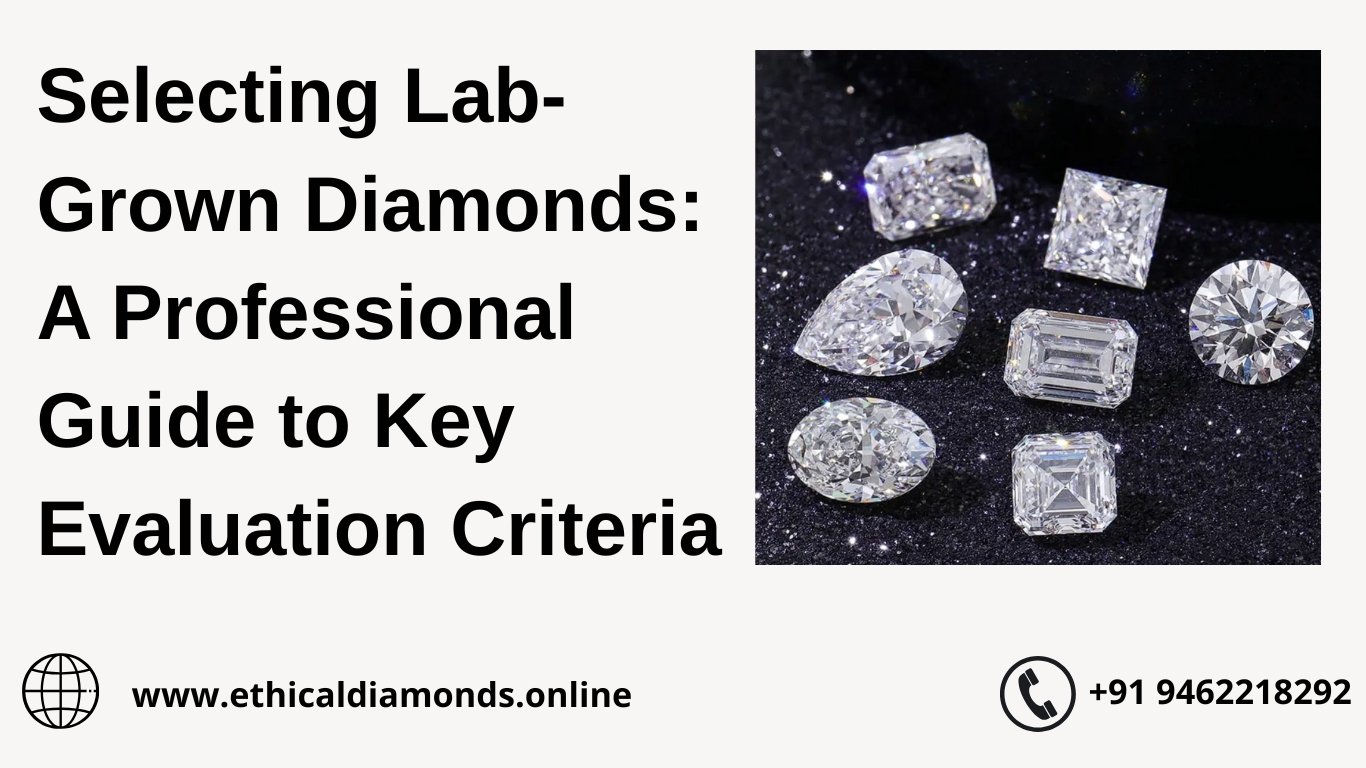
The gemological landscape has been fundamentally transformed by the introduction of laboratory-grown diamonds. Selecting a diamond today necessitates consideration not only of the traditional 4Cs but also of ethical sourcing, origin transparency, and manufacturing methodology. Laboratory-grown diamonds are chemically, physically, and optically identical to their mined counterparts, offering superior value and a verifiable origin. It is important to note, however, that the quality and pricing of lab-grown diamonds exhibit significant variation, mirroring the diversity found within natural stones. This comprehensive guide will detail the essential evaluation criteria, encompassing the foundational 4Cs and the technical nuances of HPHT and CVD production, to facilitate an informed acquisition decision.
Part I: The Foundational Evaluation Metrics (The 4Cs)
The universally accepted industry standard, the 4Cs (Cut, Color, Clarity, and Carat Weight), applies equally to laboratory-grown diamonds. A detailed understanding of each metric is the crucial prerequisite for a strategic purchase.
1. Cut: The Primary Determinant of Visual Performance
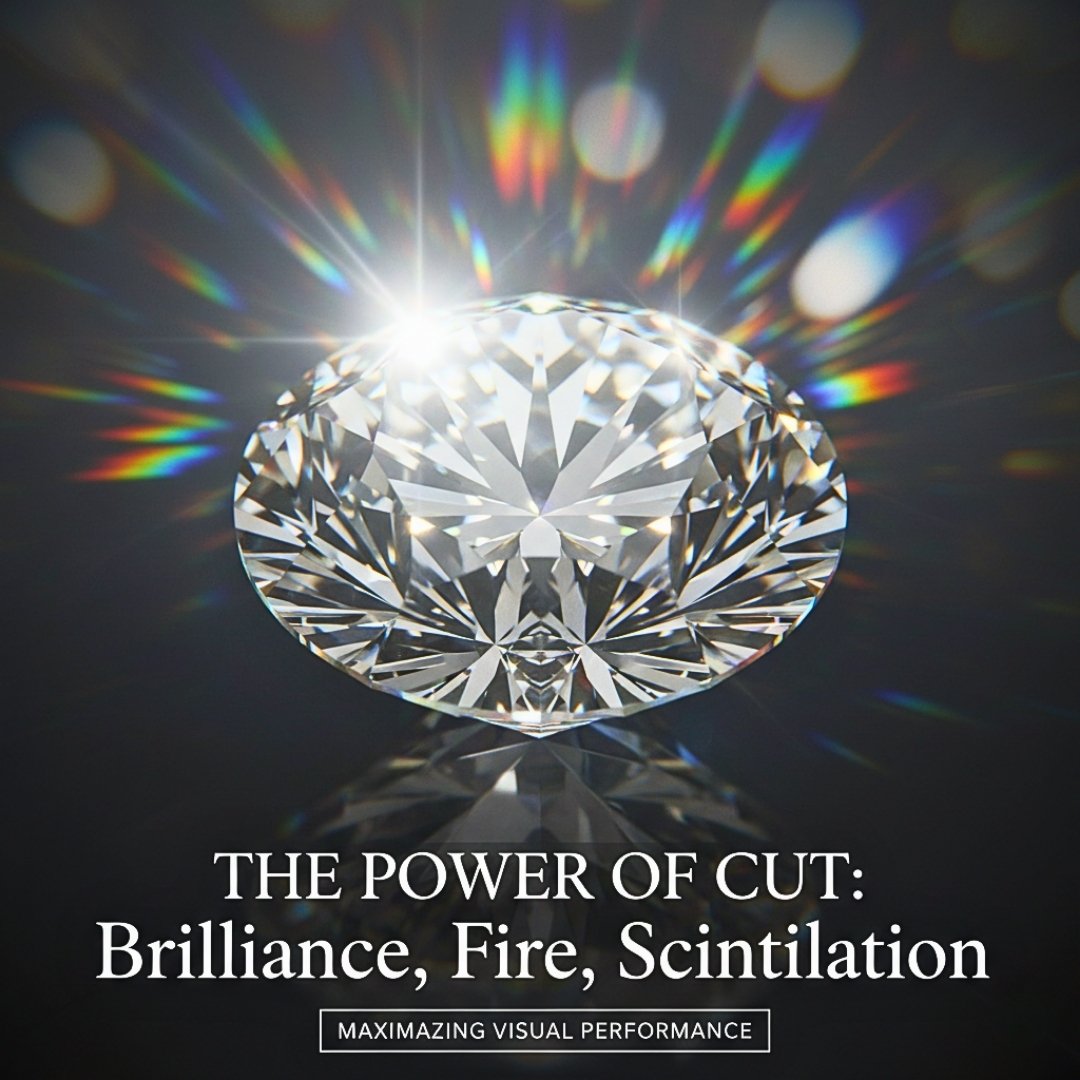
If prioritizing a single quality metric, the Cut is empirically the most crucial element. Cut refers not to the diamond’s physical shape (e.g., round or oval) but rather to the precision of its proportions, symmetry, and polish. A diamond may possess exemplary color and clarity grades, yet if the cut is subpar, its light return will be compromised, resulting in a diminished visual appearance.
How Cut Impacts Light Performance:
- Brilliance: The reflection of white light, representing the primary sparkle.
- Fire: The dispersion of light into the spectral colors (rainbow effect).
- Scintillation: The pattern of light and dark areas resulting from movement (dynamic sparkle).
Target Grades: Prospective buyers should target an Excellent or Ideal cut classification. Optimal cutting ensures that light entering the diamond is refracted and reflected back through the crown, maximizing optical performance.
Significance for Laboratory Diamonds: Given the substantial cost efficiencies inherent to laboratory production, buyers are advised to allocate resources toward achieving a superior cut grade, as this is the most impactful variable for visual quality. Maximizing cut quality is paramount for achieving exceptional brilliance.
2. Color: Assessment of Colorlessness
Diamond color is evaluated on a scale ranging from D (colorless) to Z (light yellow or brown), with color absence correlating directly with scarcity and value.
| Grade Range | Description | Recommendation |
|---|---|---|
| D–F | Colorless | Represents the highest quality. Recommended for platinum or white gold settings. |
| G–J | Near-Colorless | Optimal Value. Color is generally imperceptible without magnification when the stone is mounted, particularly in yellow or rose gold settings. |
| K–M | Faint Color | A noticeable color tint. Generally considered only when prioritizing extreme size within a constrained budget. |
Strategic Acquisition: To achieve an optimal balance between quality and cost, industry analysts frequently recommend the G or H color grades. These near-colorless stones present as visually white once mounted, allowing for the reallocation of resources toward superior Cut or Carat weight parameters. This strategy yields significant overall value.
3. Clarity: Evaluating Internal and External Purity
Clarity quantifies the presence of internal characteristics (inclusions) and external characteristics (blemishes). The grading scale extends from Flawless (FL) to Included (I).
| Grade | Description | Naked-Eye Visibility |
|---|---|---|
| FL, IF | Flawless, Internally Flawless | No imperfections visible, even under 10x magnification. |
| VVS1, VVS2 | Very, Very Slightly Included | Extremely difficult to observe under 10x magnification. |
| VS1, VS2 | Very Slightly Included | Minor inclusions, universally invisible to the unaided eye. The optimal range for value. |
| SI1, SI2 | Slightly Included | Inclusions generally invisible without magnification, though potential visibility exists in SI2 grades. |
| I1, I2, I3 | Included | Inclusions are visible to the unaided eye. |
Recommended Clarity Range: Purchasing grades higher than VVS is generally unnecessary and does not substantially enhance visual appeal. The optimal clarity range for maximizing value while maintaining an impeccable appearance is VS1 or VS2. Diamonds within this category are classified as “eye-clean,” meaning the inclusions are non-visible to the unaided eye. Acquisition of an SI1 clarity stone may represent a cost advantage, provided thorough visual inspection (ideally via high-magnification video) confirms that inclusions are neither centrally positioned nor dark.
4. Carat Weight: Measure of Mass and Visual Size
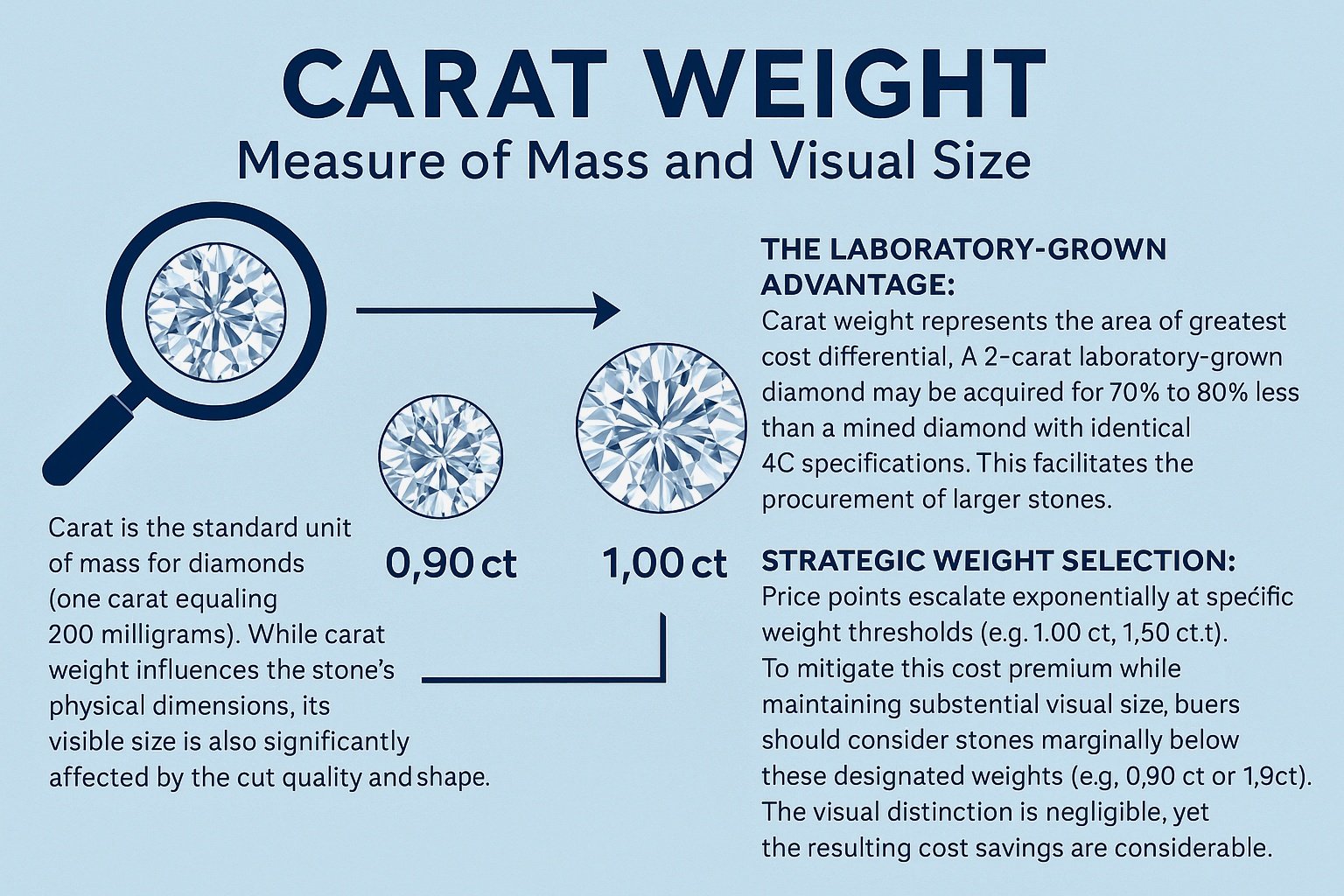
Carat is the standard unit of mass for diamonds (one carat equaling 200 milligrams). While carat weight influences the stone’s physical dimensions, its visible size is also significantly affected by the cut quality and shape.
The Laboratory-Grown Advantage: Carat weight represents the area of greatest cost differential. A 2-carat laboratory-grown diamond may be acquired for 70% to 80% less than a mined diamond with identical 4C specifications. This facilitates the procurement of larger stones.
Strategic Weight Selection: Price points escalate exponentially at specific weight thresholds (e.g., 1.00 ct, 1.50 ct, 2.00 ct). To mitigate this cost premium while maintaining substantial visual size, buyers should consider stones marginally below these designated weights (e.g., 0.90 ct or 1.90 ct). The visual distinction is negligible, yet the resulting cost savings are considerable.
Part II: Advanced Technical and Certification Criteria
For laboratory-grown diamonds, evaluation must extend beyond the 4Cs to encompass the stone’s synthesis and validation processes.
5. Synthesis Methods: HPHT vs. CVD Analysis
Laboratory diamonds are synthesized using two principal methods. Both techniques yield diamonds composed entirely of carbon with identical structural characteristics. Understanding the growth methodology is instrumental for interpreting the diamond’s grading report.
| Feature | HPHT (High-Pressure/High-Temperature) | CVD (Chemical Vapor Deposition) |
|---|---|---|
| Process | Replicates natural conditions using extreme pressure and heat with a metal solvent. | Utilizes a gas mixture in a vacuum chamber, where carbon layers are deposited onto a seed crystal at lower pressures. |
| Common Result | May present an initial slight yellow tint due to trace nitrogen. | May exhibit an initial brownish/grayish tint from lattice imperfections. |
| Post-Treatment | Less frequently utilized for color correction. | Common Practice. Frequently requires subsequent HPHT treatment to correct color and enhance clarity. |
Selection Criterion: Post-processing, the discernible difference between stones produced by either method is minimal. The governing factor for value and appeal remains the final grading parameters documented on the certificate. Procedural Note: Verification of post-growth treatment (such as HPHT annealing for color correction) on the certificate is mandatory. Such treatments are stable, established procedures utilized to optimize the diamond’s aesthetic qualities.
6. Certification: Establishing Authenticity and Quality
As the direct observation of the diamond synthesis process is impractical for the consumer, certification from an independent, reputable gemological laboratory is essential. This documentation serves as the authoritative verification of the diamond’s attributes.
Top Laboratories:
- IGI (International Gemological Institute): A prominent grader for laboratory-grown diamonds, known for providing comprehensive and consistent reports.
- GIA (Gemological Institute of America): The global standard, providing highly meticulous and precise reports, often including disclosure of the growth method (CVD or HPHT).
- GCAL (Gem Certification & Assurance Lab): Recognized for stringent grading standards, particularly in the cut quality metric.
Best Practice: It is strongly advised to acquire stones certified by either IGI or GIA. To ensure a rigorous and consistent comparative analysis, evaluations between two stones should be restricted to diamonds graded by the identical laboratory.
Part III: Economic and Aesthetic Considerations
7. Pricing, Value Proposition, and Secondary Market Dynamics
The cost difference between laboratory-grown and natural diamonds is substantial, with laboratory stones typically being acquired for 50% to 85% less for comparable quality.
- Value Proposition: This significant cost reduction enables the consumer to secure a substantially larger stone or prioritize a higher grade in the Cut and Color categories without exceeding budgetary limits.
- Resale Value: A critical distinction lies in the secondary market valuation. Natural diamonds generally retain a greater proportion of their retail cost due to their finite scarcity. Conversely, the market price of laboratory-grown diamonds tends to depreciate over time, driven by continuous technological improvements and increasing supply volume. Conclusion: Consumers should procure a laboratory-grown diamond based on its aesthetic and sentimental merits, not as a speculative financial investment.
8. Shape: Impact on Aesthetics and Perceived Size
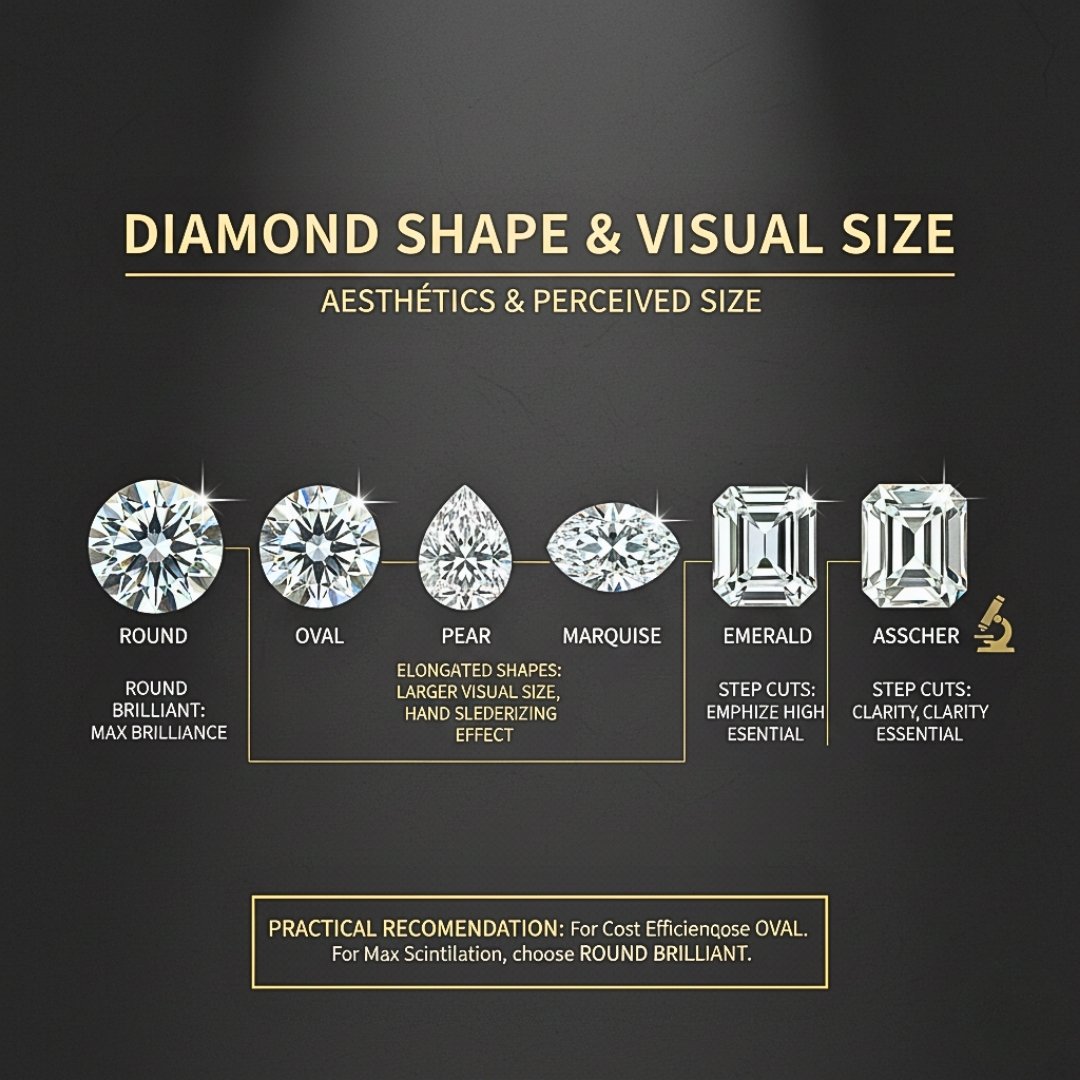
The shape of the diamond is determined by aesthetic preference, but it also influences visual size and light distribution.
- Round Brilliant: The standard choice, engineered for maximum brilliance and fire.
- Elongated Shapes (Oval, Pear, Marquise): These shapes offer a larger surface area per carat weight, resulting in a visually larger stone and a slenderizing effect on the wearer’s hand.
- Step Cuts (Emerald, Asscher): These cuts emphasize clarity and color; high clarity grades are essential as inclusions are more readily visible.
Practical Recommendation: For clients prioritizing cost efficiency, the selection of an elongated shape, such as the Oval, is advisable. Conversely, if maximum scintillation is the primary objective, the Round Brilliant cut remains the preferred choice.
9. Fluorescence: A Secondary Grading Consideration
Fluorescence is the visible light emission, typically blue, exhibited by some diamonds when exposed to ultraviolet (UV) radiation.
- Impact Analysis: In colorless diamonds (D-F), pronounced fluorescence may occasionally induce a slight haziness; however, this occurrence is infrequent. For near-colorless diamonds (G-J), a medium blue fluorescence can be advantageous, as it has the potential to mitigate subtle yellow coloration, enhancing the diamond’s perception of whiteness under daylight.
Recommendation: Buyers should not unduly emphasize the fluorescence grade. For colorless stones, “None” or “Faint” is preferable. For near-colorless stones, “Medium Blue” may represent a beneficial value-enhancing characteristic.
Final Evaluation Criteria Checklist
The following checklist summarizes the essential steps for the acquisition of a high-quality laboratory-grown diamond:
- Establish Budget and Carat Parameter: Define the target carat weight and subsequently allocate resources primarily toward the Cut metric.
- Mandate Cut Quality: Acquisition of an Excellent or Ideal Cut grade is necessary; cut quality should never be compromised for carat weight.
- Optimize Color Grade: Target G or H Color for maximum value efficiency, reserving D–F for requirements of absolute colorlessness.
- Verify Eye-Clean Clarity: Select a VS1 or VS2 clarity grade. For SI1 grades, confirmation of an “eye-clean” appearance via professional inspection is advised.
- Secure Reputable Certification: Purchase stones exclusively certified by established laboratories, specifically GIA or IGI.
- Review Synthesis and Treatment Disclosure: Examine the certificate for the stated growth method (HPHT or CVD) and any disclosure of post-growth color enhancement treatments.
- Conduct Visual Assessment: A comprehensive evaluation of the diamond’s light performance and scintillation pattern via 360-degree high-definition video is critical prior to final purchase.
Adherence to these structured evaluation criteria will empower consumers to navigate the laboratory-grown diamond market confidently, resulting in the acquisition of a stone that precisely aligns with budgetary constraints, quality standards, and aesthetic requirements.