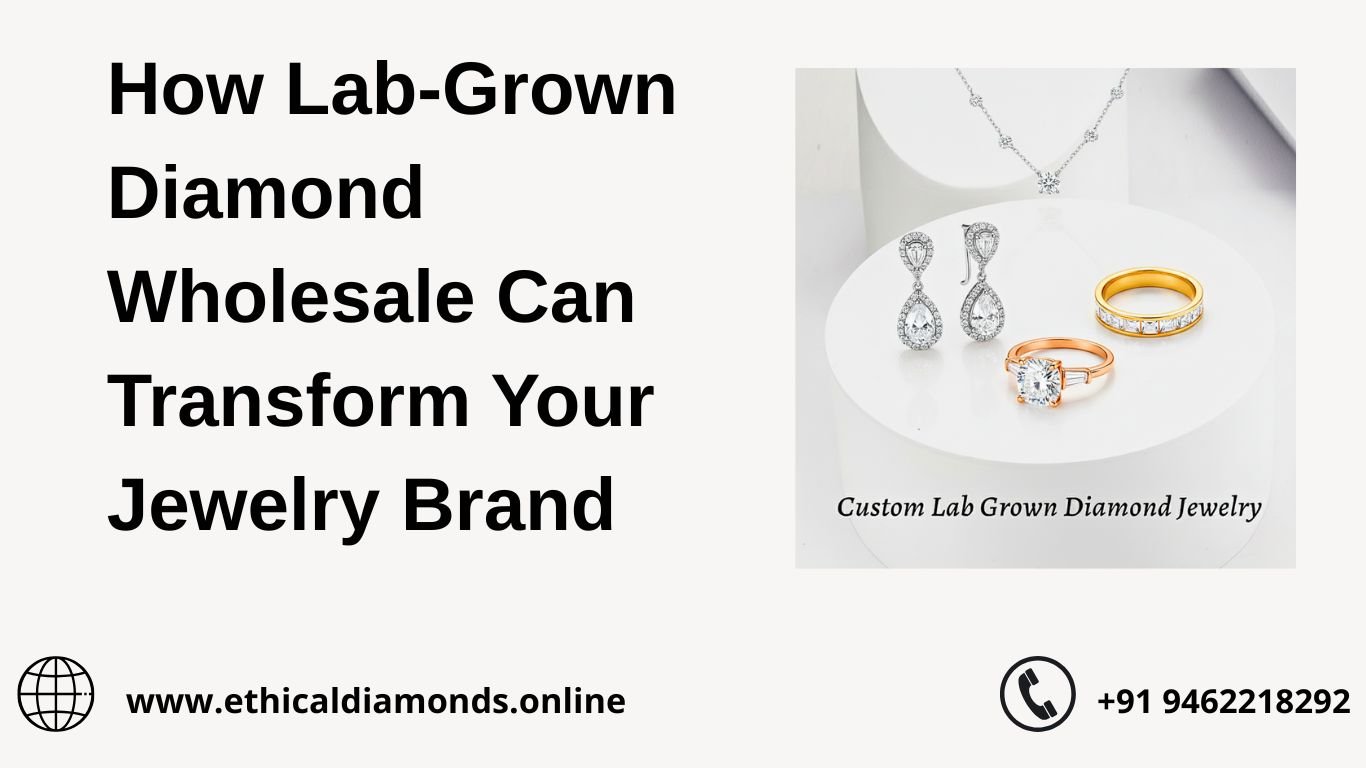
The jewelry industry is undergoing a seismic shift, driven by technological advancement and evolving consumer values. For generations, the allure of diamonds was synonymous with geological rarity. Today, however, a new era of ethical luxury and conscious consumption is here, championed by the rise of lab-grown diamonds (LGDs). These gems, chemically and physically identical to their mined counterparts, are redefining what brilliance means in the modern marketplace.
For astute jewelry business owners, strategically sourcing lab-grown diamonds at wholesale prices is far more than a passing trend—it is a critical and decisive strategy for enhancing profitability, building trust with the modern consumer, and unlocking exciting creative and design possibilities. If you are looking to secure your brand’s future and gain a distinct competitive edge, here is an in-depth look at why leveraging wholesale LGDs is your most powerful next step.
1. The Profit Edge: Maximizing Margins and Value
The immediate and most tangible advantage of switching to wholesale lab-grown diamonds lies in the substantial financial leverage they provide. Since these diamonds are cultivated in highly controlled laboratory environments rather than extracted through massive mining operations, they benefit from a significantly shorter, more efficient supply chain and consequently, lower intrinsic production costs.
Greater Value Proposition & Cost Mechanics
Wholesale lab-grown diamonds typically enter the market at a price point that is 30% to 50% less than equivalent quality mined diamonds, judged by the universal 4 C’s criteria: Carat weight, Cut quality, Color grade, and Clarity grade.
- For Your Business: This price differential is a direct windfall for your profit margins. Buying at a lower wholesale cost means that for every piece of finished jewelry you sell, a higher percentage of the retail price translates directly into profit. This increased margin flexibility allows you to run more aggressive sales campaigns, absorb potential market fluctuations, or simply reinvest more capital into marketing and customer acquisition.
- For Your Customers: The value proposition is irresistibly clear. You can offer clients a diamond that is physically identical to a mined stone but is significantly larger or possesses a notably higher quality (e.g., higher clarity or better color) for the exact same budget. This is particularly appealing to key buyer demographics like millennials and Gen Z, who prioritize visual impact and size over traditional concepts of rarity, enabling them to maximize their purchase power without compromise.
B2B Benefits of Wholesale Sourcing
Engaging with LGD manufacturers at a wholesale level often means eliminating multiple costly middlemen, further streamlining your expenses and ensuring price consistency. This direct-to-manufacturer relationship is essential for predictable cost of goods sold (COGS) and long-term financial stability. It also guarantees a continuous and reliable flow of inventory, something that is critical for scaling a successful jewelry business.
2. The Science Behind the Shine: HPHT vs. CVD
One of the most powerful tools in selling lab-grown diamonds is understanding and articulating how they are made. These stones are not imitations; they are crystalline carbon created through processes that replicate—or enhance—the Earth’s own diamond-forming conditions.
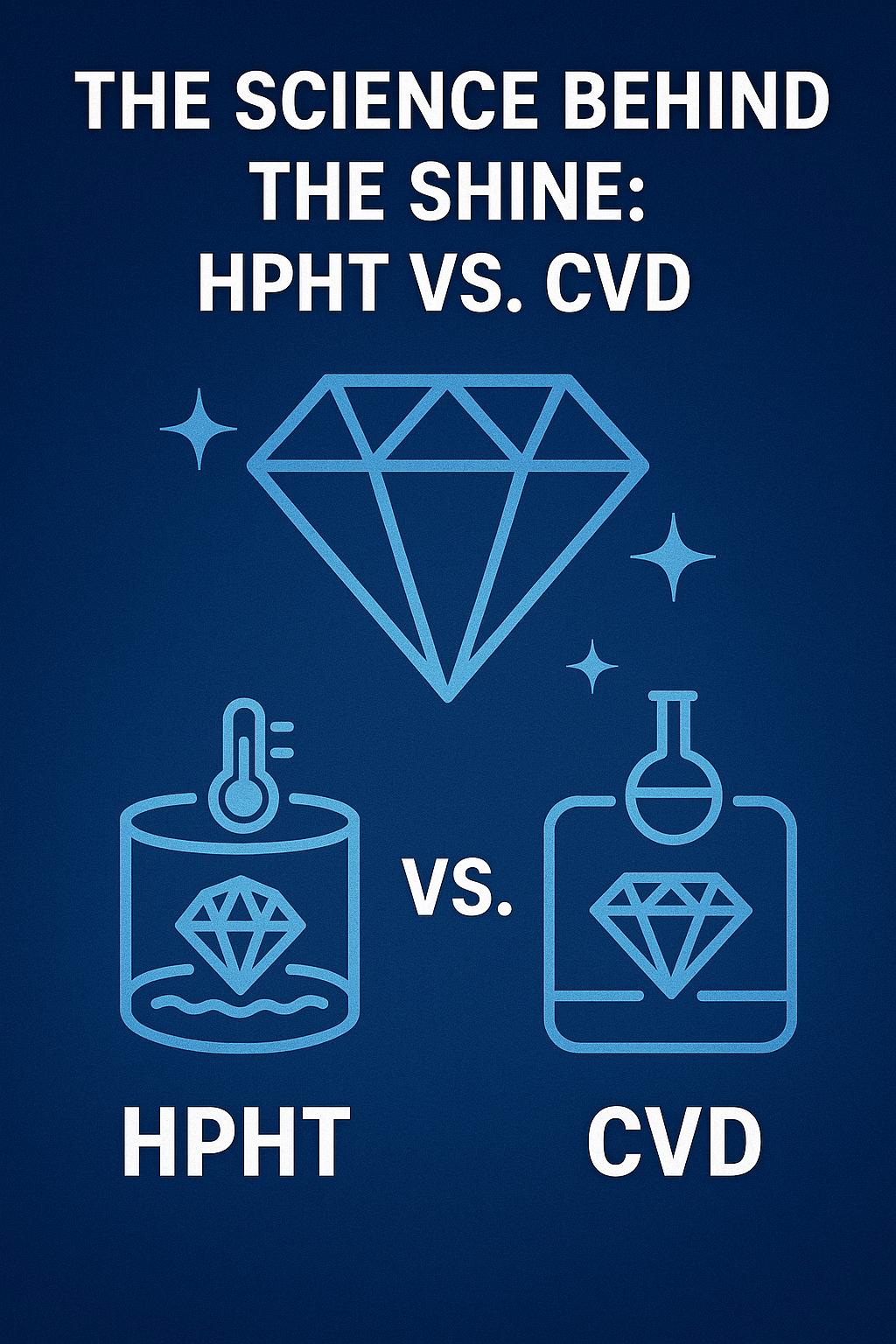
High-Pressure/High-Temperature (HPHT) Method
The HPHT process is the older of the two methods, developed to mimic the extreme conditions deep within the Earth’s mantle. Carbon material is dissolved in a metal catalyst and exposed to immense pressure (around 5.5 gigapascals) and high heat (1,500°C), allowing the carbon atoms to crystallize around a small diamond seed. This method typically produces diamonds with a characteristic cuboctahedral shape and is highly effective for creating colored diamonds.
Chemical Vapor Deposition (CVD) Method
The CVD method is more modern and involves placing diamond seeds inside a vacuum chamber. Carbon-containing gases (like methane) are introduced and heated until they break down into carbon plasma. The pure carbon then “rains” down onto the seed crystals, growing the diamond layer by layer over several weeks. CVD allows for precise control over the diamond’s growth environment, often resulting in high-purity, Type IIa diamonds—a classification that includes many of the world’s most valuable natural diamonds.
By understanding these two advanced technological processes, jewelers can effectively counter any customer skepticism and reinforce the fact that LGDs are, chemically and optically, real diamonds.
3. The Ethical and Sustainable Appeal: Building a Modern Brand Identity
Today’s consumers are not just purchasing a product; they are purchasing a brand’s story and its values. Jewelry, as an emotional purchase, is particularly susceptible to concerns regarding provenance and ethical sourcing. Lab-grown diamonds offer a transparent and compelling narrative that resonates deeply with conscious luxury buyers.
Conflict-Free Assurance and Traceability
A cornerstone of the LGD appeal is the verifiable guarantee of a conflict-free origin. Unlike the opaque and sometimes contentious supply chain of mined diamonds, lab-grown gems are created in traceable, controlled laboratory settings. This assurance allows you to completely sidestep the ethical dilemmas historically associated with traditional diamond mining, such as conflict financing, human rights abuses, and child labor. Every stone comes with clear documentation of its origin, providing unparalleled peace of mind to both you and your customer.
Reduced Environmental Impact & The Sustainable Luxury Movement
While LGD production consumes energy, the overall environmental footprint is markedly less severe than that of industrial mining, which involves massive earth displacement, habitat destruction, and significant water usage. In contrast, many leading lab-grown manufacturers are now making significant commitments to sustainability, increasingly relying on renewable energy sources to power their labs. By highlighting your partnership with these ethical suppliers, you position your jewelry as a genuinely sustainable luxury choice, attracting a growing segment of the market that demands environmental responsibility.
4. Unprecedented Design Freedom and Inventory Control
From a design and operational perspective, sourcing lab-grown diamonds wholesale provides flexibility that can stimulate creativity and streamline your business operations.
Design Versatility: Unleashing Creativity
For jewelry designers, the accessible pricing of LGDs is a powerful creative release. You are no longer constrained by the prohibitively high cost of large or unique natural stones.
- Customization and Statement Pieces: You can confidently experiment with elaborate and intricate settings, use more complex diamond cuts, or incorporate a higher density of stones (pavé, halo settings) that would have been cost-prohibitive with mined gems. This allows you to create truly bespoke, signature pieces and cater to the high market demand for statement jewelry.
- Availability of Fancy Colors and Shapes: Wholesale LGD suppliers offer an extensive range of fancy colors and non-traditional shapes (like elongated ovals or kite cuts) with greater consistency and availability than natural fancy diamonds. This allows you to offer more fashionable and personalized options to your clientele.
Efficient and Low-Risk Inventory Management
Wholesale purchasing dramatically improves your inventory management strategy. By investing less capital per carat, you can maintain a more robust, healthy stock of popular diamond sizes and cuts. This reduces your financial exposure and risk compared to carrying high-value mined diamonds, allowing you to use that freed-up capital for other critical business areas, such as marketing or expanding your design line. Reputable wholesale partners ensure consistent, certified quality, guaranteeing fast and reliable fulfillment for your custom orders.
5. Strategic Positioning: Securing Your Brand’s Future
To fully capitalize on the LGD market shift, your business needs a strong strategy to address customer perceptions and market dynamics.
The Authenticity Imperative: Education is Key
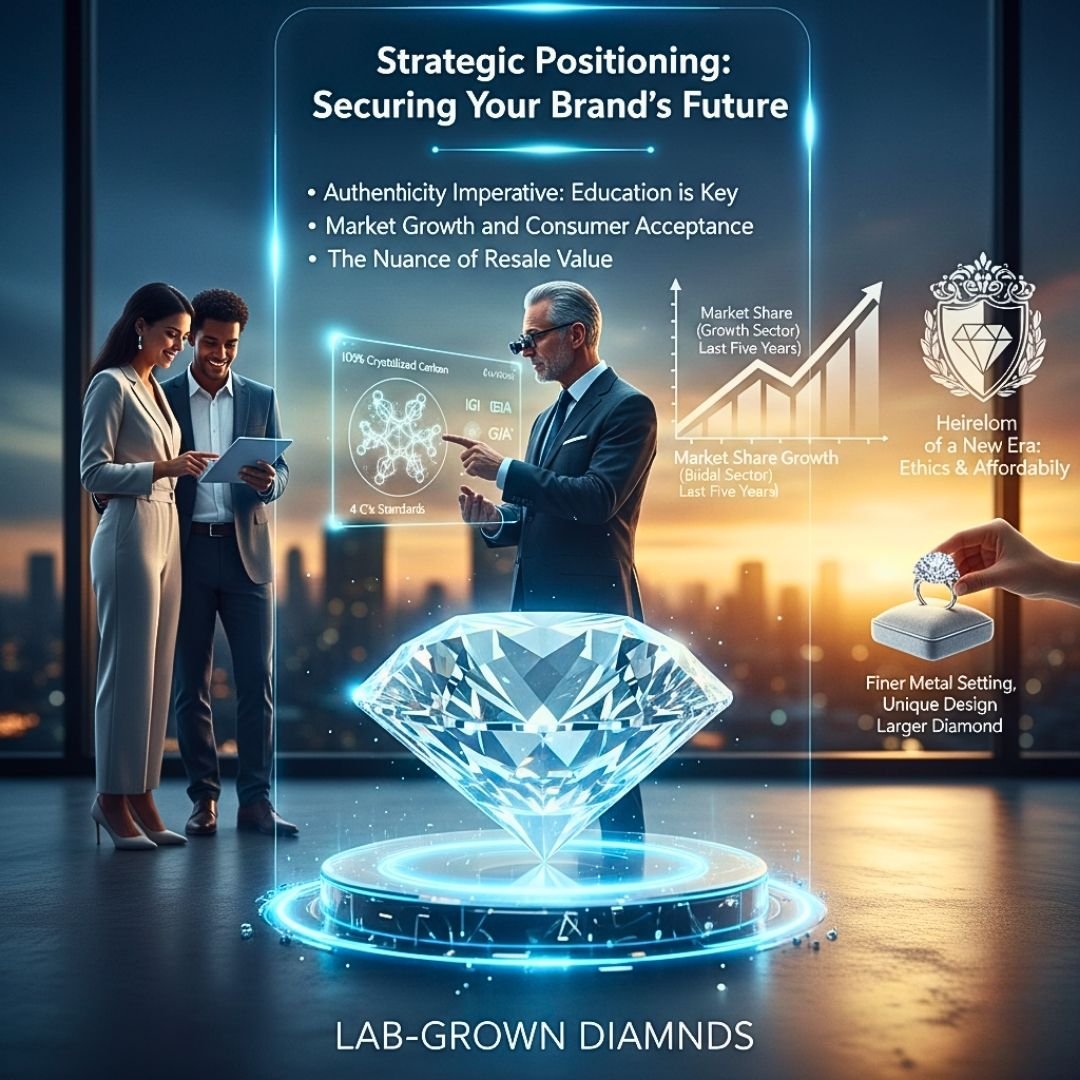
It is vital to educate customers clearly: lab-grown diamonds are real diamonds. They are 100% crystallized carbon and share the exact same chemical, optical, and physical properties as mined diamonds. They are graded using the same 4 C’s standards and certified by world-leading gemological institutes like the IGI and GIA. Your sales team must be equipped to articulate the science, the ethics, and the value proposition to confidently distinguish LGDs from simulants.
Market Growth and Consumer Acceptance
Consumer acceptance of lab-grown diamonds is no longer a question—it’s a reality. The market share, particularly in the critical bridal sector, has grown exponentially over the last five years. Young buyers are driving this acceptance, viewing LGDs not as an alternative, but as a preferred luxury choice that aligns with their fiscal and environmental consciousness. Positioning your brand as forward-thinking and responsive to these modern values will attract this rapidly expanding customer base.
The Nuance of Resale Value
While natural diamonds carry the legacy of being a perceived “heirloom investment,” the true investment value of most natural diamonds is often overstated. Instead of focusing on investment, position LGDs as a purchase of exceptional, enduring value and beauty. The stone is a luxury item meant to be worn, loved, and passed down as an heirloom of a new era—one that values ethics and affordability. Customers can invest their savings in a finer metal setting, unique design, or simply enjoy a larger, more spectacular diamond today.
By embracing wholesale lab-grown diamonds, you are doing more than simply diversifying your inventory—you are aligning your brand with the core values of transparency, sustainability, and exceptional value that define the future of luxury. This proactive and strategic pivot is essential to ensure your jewelry business remains competitive, relevant, and brilliantly successful for years to come.